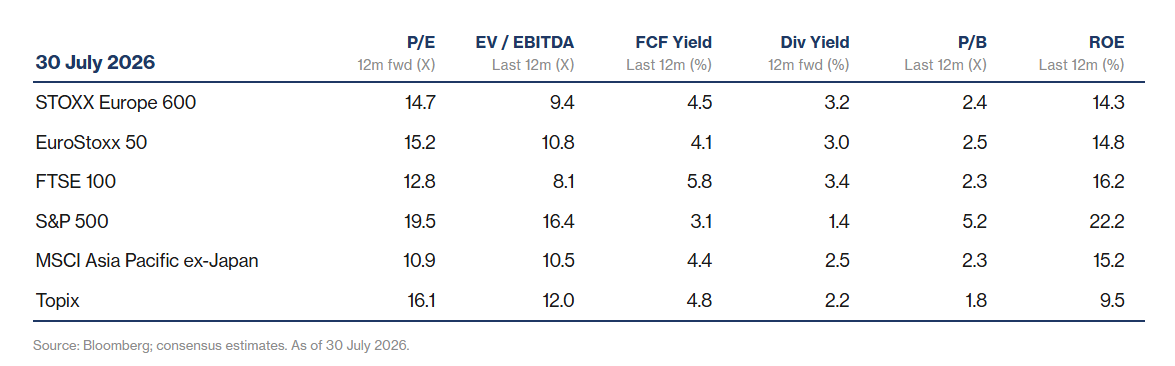
The week's sell-off in AI names looked alarming and meant little. Sharp momentum rallies almost always give way to a stretch of consolidation (especially when risk management is not closely followed on underlying valuations), and this one arrived with positioning already lighter, and leverage being cut clearing the path for the next advance rather than block it. Direction from here belongs to earnings, and earnings are cooperating.
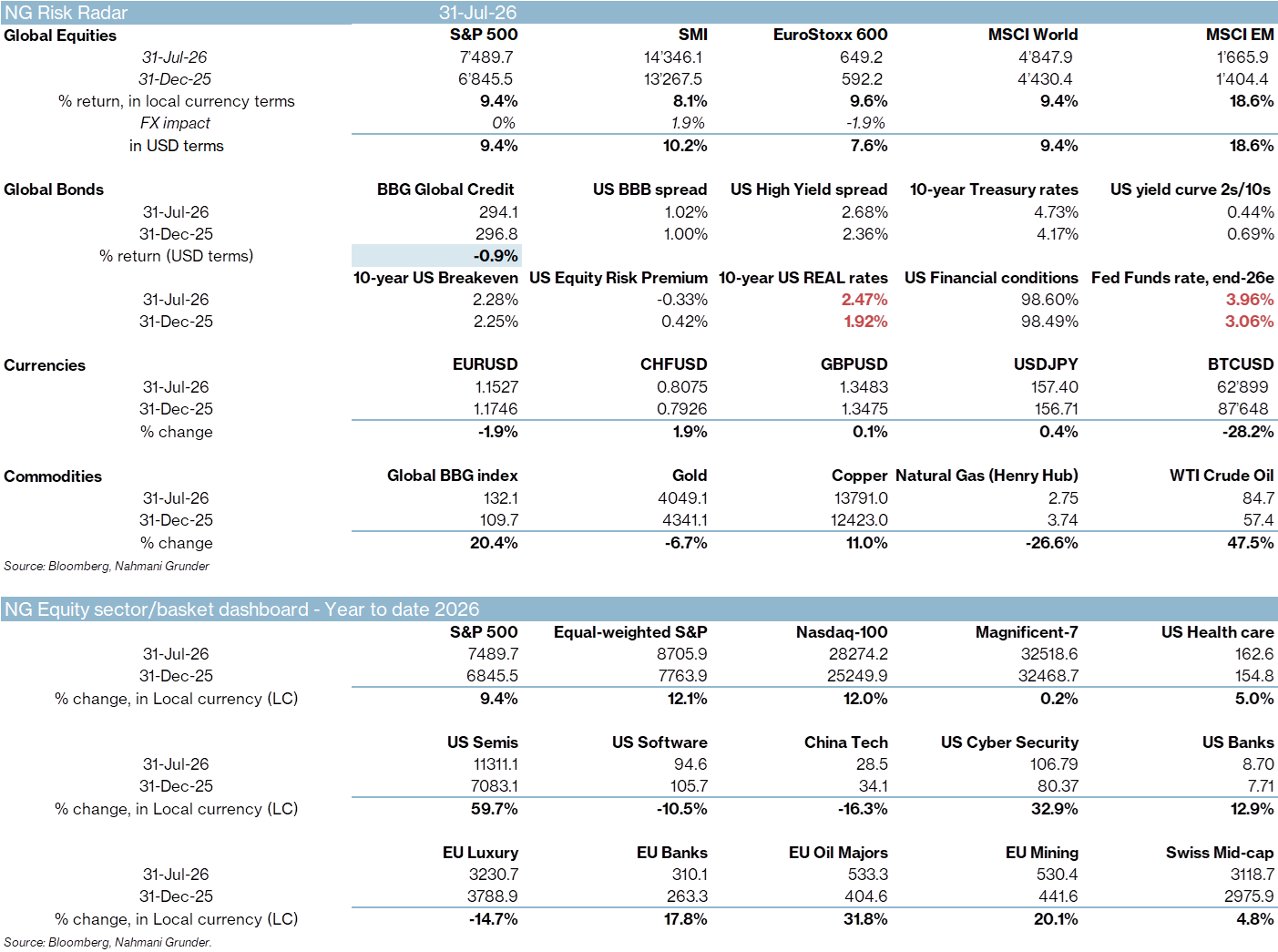
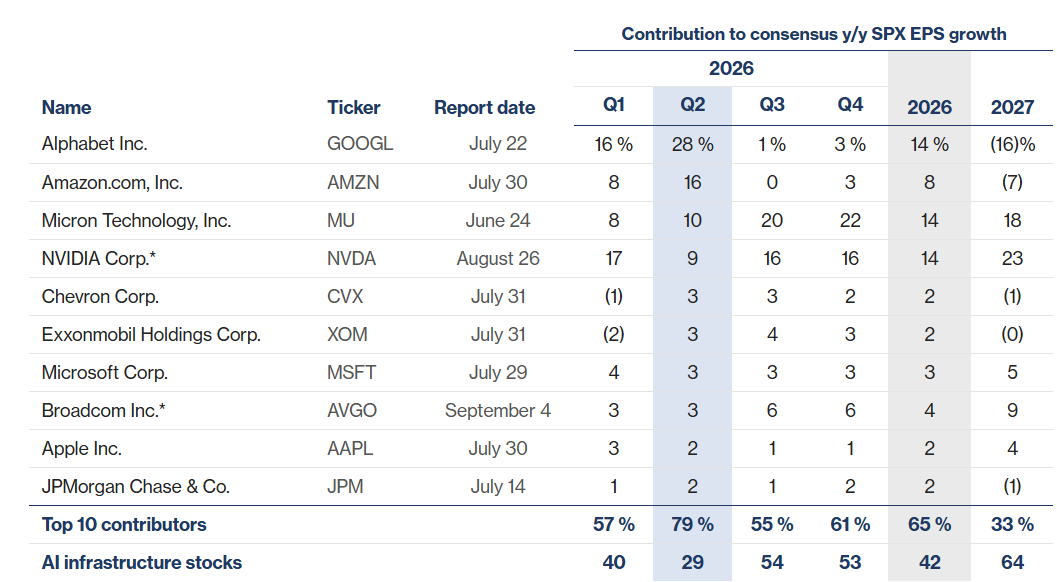
This is shaping up as one of the strongest reporting seasons on record. With 61% of the S&P 500 in, 64% of companies have beaten consensus by more than a full standard deviation a reading rarely seen. More telling than the beats is where they come from. The rally is no longer the property of a handful of megacaps : the equal-weight S&P is up 12.1% this year against 9.4% for the cap-weighted index, while the Magnificent Seven have gone nowhere (+0.2%) but one to watch out for. Even the giants, though, are starting to turn AI spending into revenue, Alphabet, Amazon and Microsoft all beat on the top line, with cloud growth reaccelerating to 48% year-on-year from 39% in Q1. Nvidia, reporting 26 August, is the last real test and one where the compute shortage should once again be reaffirmed. Europe also deserves more credit than it gets: with two-thirds of the STOXX 600 reported, first-half earnings are running +13%, the fastest pace in three years. Whilst Switzerland, notably its quality mid-cap names have had a stellar summer catch up.
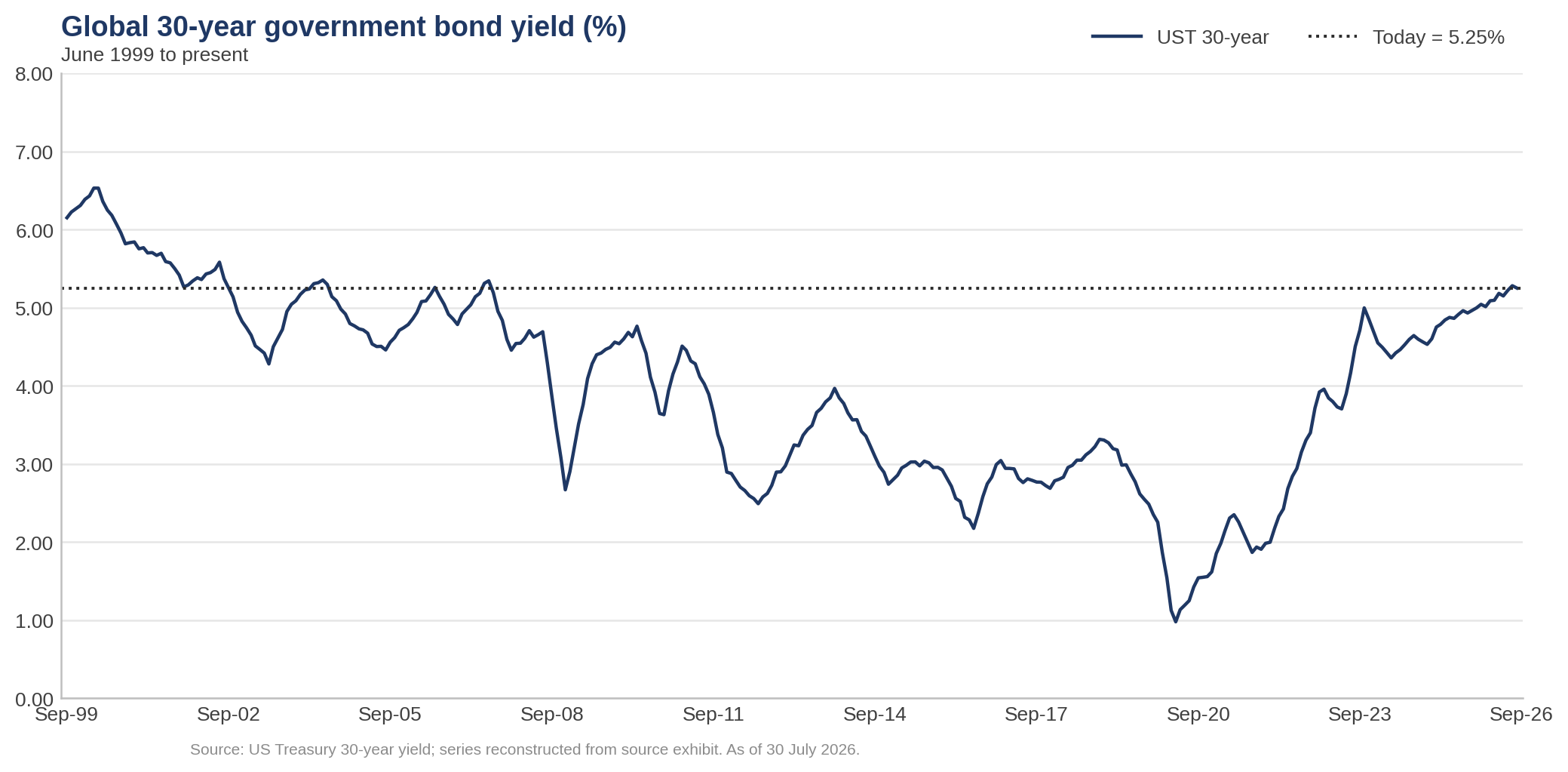
If earnings have settled the bull case, the long end of the curve now sets its ceiling. The Chair's suggestion that core PCE may no longer be the sole anchor for policy was enough to lift the 30-year yield 13bp to a two-decade high of 5.2% and steepen 2s30s by 17bp a market taking him at his word that the curve, not the funds rate, is doing the tightening. Equities and credit have yet to fully absorb the message. A September hike is now 68% priced, and the move is global: 30-year yields in Japan, Germany and the UK have all reached multi-decade highs. As guidance loses its force, the Chair is left leaning on credibility alone a narrower base than he may wish for, more to follow from Jackson Hole on the 5th of August.
Gold has spent the year going quietly nowhere, which is exactly what makes it interesting. At roughly $4,050 it is down 6.7%, yet refuses to break $4,000. The speculative excess of the last cycle has cleared, leaving a less crowded trade with a lower bar to rally; central banks are buying again, a structural bid rather than a tactical one; and the headwinds, higher US rates, a firmer dollar are the cyclical kind that fade. Set against the trajectory of developed-market debt and a more fragmented world, gold remains the cleanest hedge in the book.
The through-line is simple: earnings have done their job and breadth is improving, so the risk has migrated from the numerator to the denominator. We stay constructive on equities, favour the broadening beneath the surface , and hold gold against the fiscal and geopolitical tail.